
Sustainable Edible Garden in Marietta, Georgia
Zen Edible Gardens is ZenDev Homes’ working prototype for productive residential landscapes.
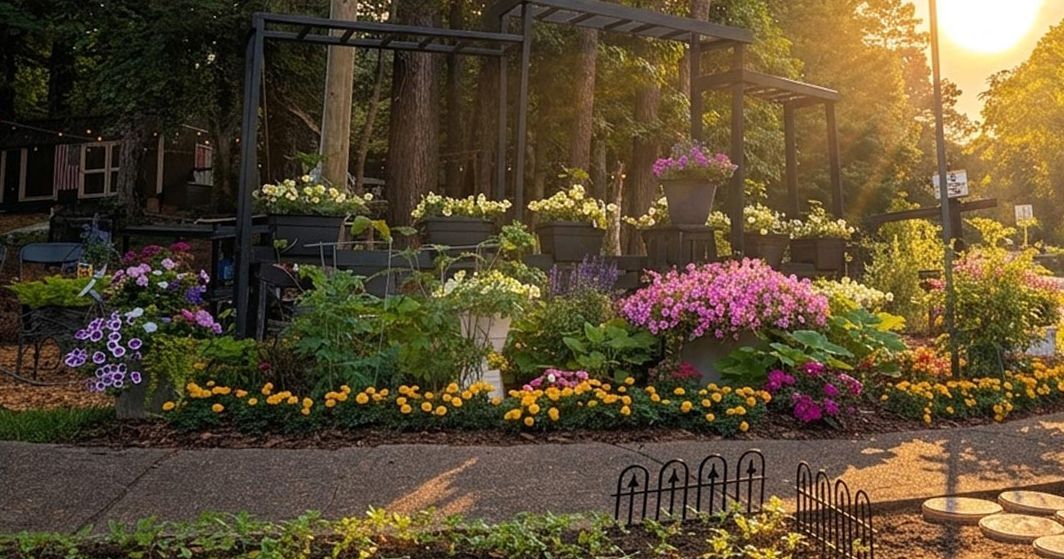
We’re actively helping homeowners explore ways their land can grow food, improve soil, support pollinators, and bring people together.
Zen Edible Gardens is a living prototype for food-producing homes and communities
Homes are often evaluated by what they cost to buy. We think they should also be evaluated by what they cost to live in, and what they can give back over time.
ZenDev Homes is building toward a more resilient, sustainable, and self-reliant model of homeownership.
Most home builders answer the question, “What will this house cost?”
We ask a different question:
What can this house and its land give back over the next thirty years?
At ZenDev Homes, we believe the home and the land should work together
We put this idea into action at Zen Edible Gardens. Instead of simply building a home on land, we make the land part of the home.
Growing more than a garden
Most residential landscapes are designed for looks. People mow, edge, admire, and often hire someone to maintain them. The land around a house is often seen as just another expense to maintain.
But a homeowner’s land can become something more: a source of food, healthy soil, biodiversity, better water management, beauty, wellness, and even stronger connections between neighbors.
Zen Edible Gardens puts this idea to the test in a real home, on a real lot, in a real neighborhood.
The prototype garden
The Zen Edible Garden is located at the home of Anita and Armando Ortega in the Forest Chase community in Marietta, Georgia. It’s not just a drawing or an idea. It is a real, working edible landscape, built in Georgia clay on an ordinary neighborhood street.
Fruit and nut trees. Perennial berries and vines. Raised beds with irrigation. An active composting system returns organic matter to the soil. Seasonal vegetables and herbs alongside pollinator plantings that support the larger ecosystem.
None of this happened overnight. The garden was built in stages, changed when things didn’t work, and improved over time through observation and experience.
The first harvest was not food
Productive land does more than grow plants. It helps grow relationships too.
Forest Chase has a separate community garden, and the two gardens are connected through shared volunteers, plants, knowledge, and resources. Neighbors visit, volunteer, share plants and cuttings, exchange knowledge, contribute resources, and invite more people to join.
We didn’t expect this at first, but it has become one of the most important outcomes of the project.
The first thing a successful community garden produces might not be food. It might be community!
A regenerative landscape gets stronger when people care for it together. The people involved are just as important as the irrigation, plants, compost, and soil.
Zen Edible Gardens is not just meant to be a showpiece. It is one step in a planned process.
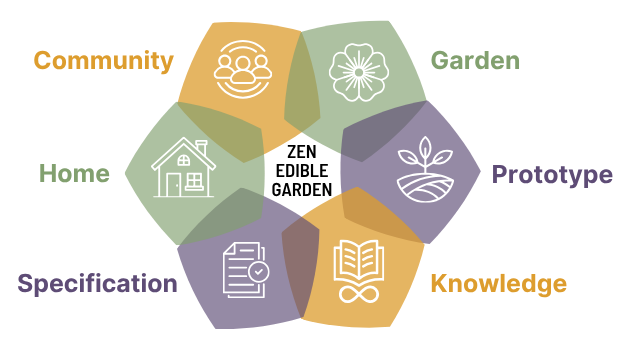
The garden has grown through hands-on experiments, gardening knowledge, permaculture ideas, soil science, teamwork, and the help of neighbors and community partners. Each season brings new people, new insights, and new lessons.
First, we test. Then we watch and measure. Next, we document what happens. Finally, we turn what we learn into something that homeowners, builders, or communities can actually use.
That’s what makes a prototype different from just a nice yard.
Three levels of a Zen Edible Garden edible landscape
Not every family wants a full homestead. Most just want a place to begin. That’s why the system has different levels, so homeowners can start with the level that fits their property and lifestyle and expand later if they want.
Level 1
Edible Foundation
Fruit trees, berries, herbs, perennial edibles, and pollinator plants are naturally incorporated into the landscaping.
The property still looks and works like a professionally designed yard—it just produces food as well.
Level 2
Family Garden
This includes everything in Level 1, plus raised beds, irrigation, composting, and seasonal planting areas for families who want to grow more of their own vegetables and herbs.
It's beautiful and functional, perfect for any lot.
Level 3
Homestead Garden
This is a more complete food-producing landscape, designed for the specific lot and the family’s lifestyle and goals. It includes more perennial plants, bigger growing areas, advanced composting, rainwater collection, and more intensive vegetable growing where possible.